Ask most CFOs to describe freight audit and payment, and you will usually hear some version of this: “It’s the thing the logistics team handles to make sure carrier invoices get paid correctly.” Necessary. Important. Unstrategic.
Now ask that same CFO to name one of the company’s largest sources of hidden financial risk, and they probably won’t name the same function. According to the data, that’s a mistake.
Poorly managed freight audit and payment is where transportation spend errors and financial risk often go unnoticed. Done correctly, the freight audit process becomes one of the strongest control points in the entire supply chain: giving finance, logistics, and transportation leaders better visibility into freight spend, carrier behavior, invoice accuracy, and the real cost of moving goods.
That shift is significant. More than just an accounts payable task, for enterprise shippers, freight auditing and payment is rapidly becoming a strategic advantage.
The Cost of Treating Freight Audit as Transactional
The transactional view is comfortable because it makes audit feel manageable. Invoices come in. Someone checks the obvious items. Approved freight bills move to payment. Records get filed.
But that is where the risk starts.
Errors get processed. Valuable data goes unused. Accountability blurs.
A freight invoice can look reasonable and still be wrong. The base rate may match the carrier contract, but the fuel surcharge may not. The shipment may carry the wrong freight class. Accessorial charges may be applied outside the agreed terms. A duplicate charge may sit behind a slightly different reference number.
One error may not feel urgent, but when it compounds across thousands of shipments, it becomes real money.
Studies have found freight audit recovery opportunities can range from 3-5% of annual transportation spend, depending on data quality, contract complexity, and process maturity. That is not a rounding error for an enterprise shipper managing millions in total freight spend.
The bigger loss is not always the overcharge itself. It is the bad decision that follows bad data.
If invoice errors are not caught, finance may trust numbers that are already distorted. If audit data is only filed away, procurement loses leverage, and if nobody studies discrepancy patterns, a carrier can drift away from contract terms for months before anyone notices.
The invoice is the symptom. The real risk is the business decision built on inaccurate transportation data.
What Audit Data Enables Across the Supply Chain
A strong freight audit is not just a compliance checkpoint that produces data. It is a data engine that happens to validate freight invoices.
That is the reframe.
When audit data is clean, shipment-level, and tied back to contract terms, it can support decisions across the supply chain. Finance gets better accruals. Procurement gets better facts for carrier negotiations. Logistics gets a clearer view of carrier performance, lane cost, accessorial charges, and service issues.
A shipper armed only with invoice totals negotiates on hope. A shipper with three years of validated audit data by lane, mode, carrier, surcharge, and shipment type negotiates from strength.
The same data also supports network design. It can show which lanes are overpriced, which modes are underused, and which carriers are underperforming for the cost. Without that view, supply chain optimization becomes guesswork. With it, freight management becomes a continuous improvement process.
This is where freight audit and payment starts to move out of the back office and start becoming part of business intelligence, transportation spend control, and supply chain strategy.
Transactional vs. Strategic: Where Does Your Program Sit?
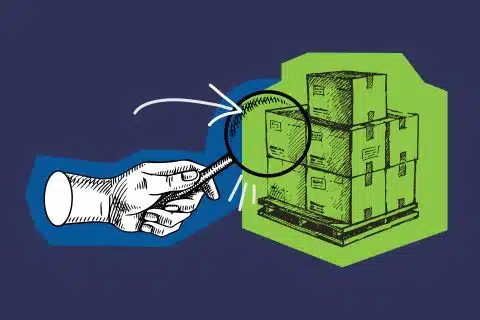 Most freight audit and payment programs sit somewhere between transactional and strategic. The difference goes beyond software to how the audit data is used.
The move from left to right does not happen in one step: it takes better data, better ownership, better tools, and a freight audit service that understands both billing detail and supply chain impact.
But the direction is clear: Freight audit and payment has become too important to leave as a clerical process.
Why Freight Audit Is Changing
This shift is happening because freight is harder to manage than it used to be. Carrier pricing has become more complex.
For instance, UPS and FedEx announced average 5.9 percent general rate increases for 2026, but the real-world impact can be higher once surcharges, package profiles, zones, and service mix are included.
That complexity matters because freight audit depends on detail. A small rule change can affect parcel, LTL, truckload, intermodal, or international freight in different ways. A single oversized parcel, a dimensional weight rule, or an accessorial charge can shift the true shipping cost on a lane.
Rising carrier complexity is only part of the story. The financial stakes are increasing as well. Margin pressure is another reason. Retail, manufacturing, healthcare, life sciences, and third-party logistics teams are all looking for cost recovery that does not disrupt service. Freight audit is one of the few places where cost recovery and governance can happen together.
Technology has also changed the equation. Advanced freight audit solutions can automate rate matching, invoice checks, exception routing, and cross-carrier comparisons across large volumes of invoices. That helps teams spot issues faster.
But automation does not remove the need for judgment.
Logistics Management’s 2026 freight payment analysis points to a clear trend: providers are pairing AI with human expertise to improve audit accuracy, fraud control, and transportation spend optimization.
The technology finds the pattern. Experienced specialists decide what it means.
What an Effective Freight Audit Solution Looks Like
A real freight audit solution should do more than move invoices through a queue.
It should validate each shipment against the contract terms that apply. Not just summary totals. Not just carrier-reported charges. The right freight audit checks the freight invoice against the shipment, the rate, the lane, the mode, the service level, and any accessorial charges.
It should also give a clear audit trail. Every flagged discrepancy, approved exception, recovered overcharge, and payment decision should be easy to trace. That matters for internal controls, executive reporting, and audit defensibility.
Integration matters too. Audit data becomes more useful when it connects with a transportation management system, ERP, procurement tools, and finance reporting. The CTSI-Global Honeybee TMS shows how transportation management and shipment execution can connect more closely, while CTSI-Global business intelligence tools help turn invoice data and KPIs into clearer reporting.
And then there is the human side.
A dedicated freight audit team can handle the cases software cannot settle on its own. Carrier conversations. Contract interpretation. Root-cause analysis. Exception review. Those are the places where domain knowledge still matters.
That is what separates a true freight audit and payment provider from a basic invoice processor.
Why Freight Audit Belongs in the Strategic Conversation
Freight audit is not a back-office function anymore. It is the connective tissue between transportation operations, finance, accounts payable, procurement, and supply chain strategy.
For enterprise shippers, that matters. A clear view of actual freight spend can support better carrier negotiations, cleaner invoice processing, stronger compliance, and more efficient freight management.
A strong audit provider should help a shipper answer practical questions.
Are we paying the right rate? Are freight invoice errors repeating? Are carrier contracts being followed? Are accessorial charges rising because of market changes, network issues, or weak controls? Are we missing overcharges that should have been stopped before payment?
These questions shape profit margins, transportation costs, and the strength of the overall supply chain.
Weak audit means weak controls. Full stop.
Strengthen Freight Audit and Payment With Better Visibility and Control
Freight audit and payment has earned its place in the strategic conversation.
The shippers treating it that way are recovering real money, negotiating from stronger ground, and giving finance teams transportation data that can stand up to executive scrutiny.
The ones still treating it as paperwork are paying for the privilege through billing errors that never get flagged and decisions built on incomplete data.
The shift toward effective freight audit is available to any enterprise shipper that wants it. The only variable is timing.
CTSI-Global freight audit and payment solutions combines advanced technology, transportation spend intelligence, and experienced specialists to help enterprise shippers improve invoice accuracy, strengthen financial controls, and gain greater visibility into transportation spend.
Freight Audit and Payment FAQ
What is the freight audit and payment process?
Freight audit and payment is the process of examining freight invoices before they are paid. It checks the freight invoice against the carrier contract, shipping rates, shipment data, freight classifications, and billing terms. For a shipper, this helps catch errors early and gives a clearer view of freight spend.
Why does freight audit matter in logistics?
Freight audit matters because logistics operations can become expensive fast when invoice errors go unnoticed. A freight bill may include the wrong fuel charge, accessorial fee, or carrier rate. A strong freight audit service helps protect freight costs, improve visibility, and support better carrier relationships.
What are the benefits of freight audit?
The benefits of freight audit go beyond fixing one invoice. A robust freight audit can reduce billing errors, improve payment processes, strengthen supply chain management, and help supply chain leaders identify trends in transportation spend. It also gives the business cleaner freight data for planning.
How does freight audit support supply chain strategy?
Freight audit helps connect invoice processing with the broader supply chain. When audit data is accurate, leaders can see what is happening across the transportation network, global transportation activity, and global supply chains. That helps them manage freight costs with more confidence instead of reacting after money has already left the business.
What makes advanced freight audit solutions useful?
Advanced freight audit solutions use freight audit software, automated audit checks, and advanced technology to review large volumes of invoices faster. Automating the freight audit process can help flag billing issues, compare charges against contract terms, and give teams a better view of freight before payment.
What is the role of freight audit providers?
The role of freight audit providers is to help shippers gain visibility and control over freight spend. Many freight audit programs still struggle with manual review, scattered freight data, and a lack of visibility and control. Providers such as CTSI-Global show how auditing and payment has moved beyond basic invoice checking.
Is freight audit and pay only about cost savings?
No. Freight audit and pay can support cost savings, but it also helps with supply chain control, carrier relationships, invoice accuracy, and better decision-making. In simple terms, freight audit helps a shipper stop guessing about freight costs and start managing them with cleaner data.
How is freight audit different from transportation spend intelligence?
Freight audit focuses on validating transportation invoices and identifying billing discrepancies. Transportation spend intelligence builds on that foundation by using audit data to support forecasting, carrier strategy, transportation optimization, financial governance, and executive decision-making.